
Quickteller: Total design overhaul to improve the experience of a leading African payment app serving millions of customers.
Summary
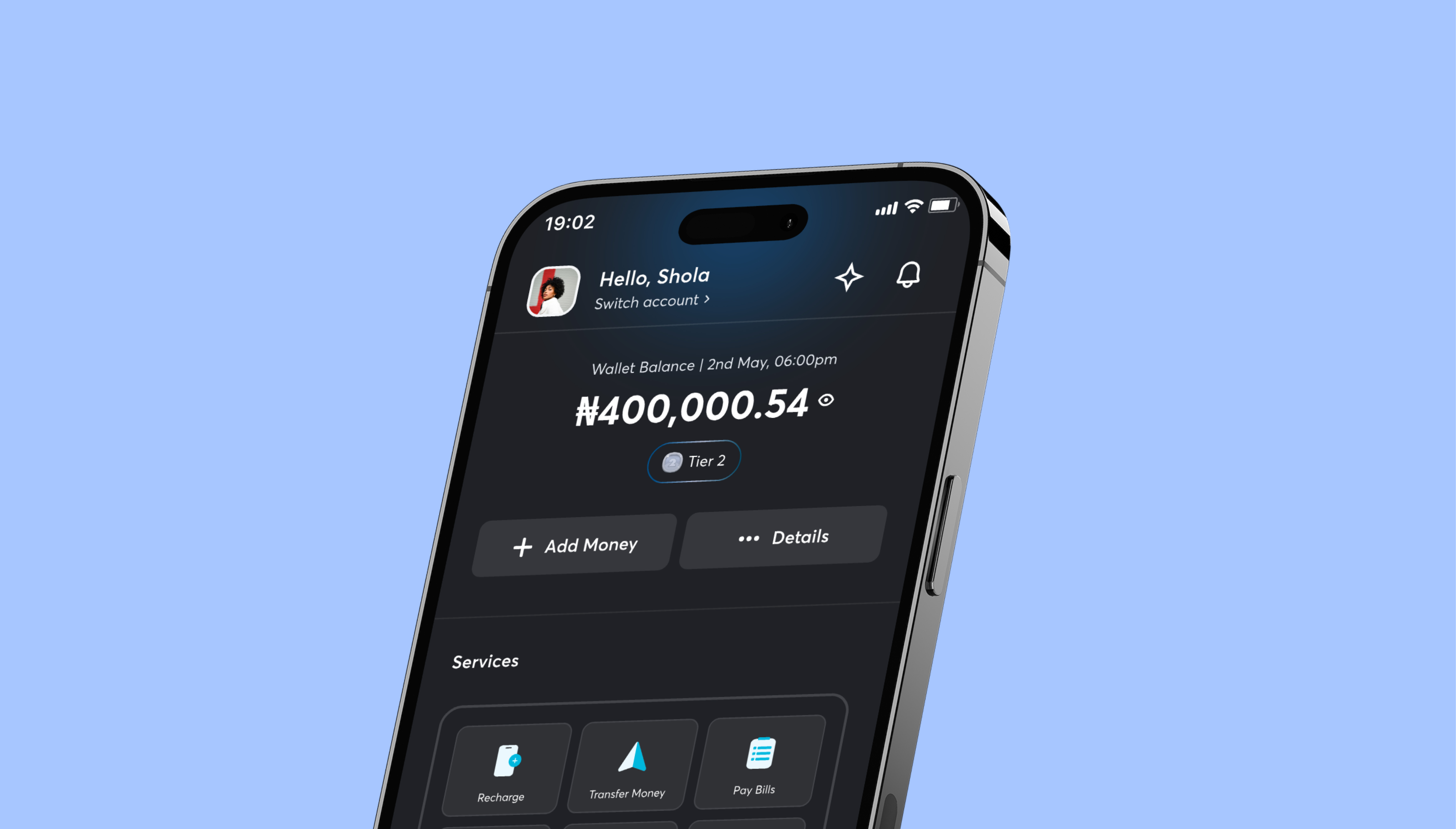
The ground-up design overhaul of Quickteller on Web, Mobile and USSD. From its start in October 2021 till my watch ended in October 2024, I served as the lead designer overseeing a team of six through research, the design of the new mobile, web, and USSD apps, all the way to its closed beta release.
Why overhaul Quickteller
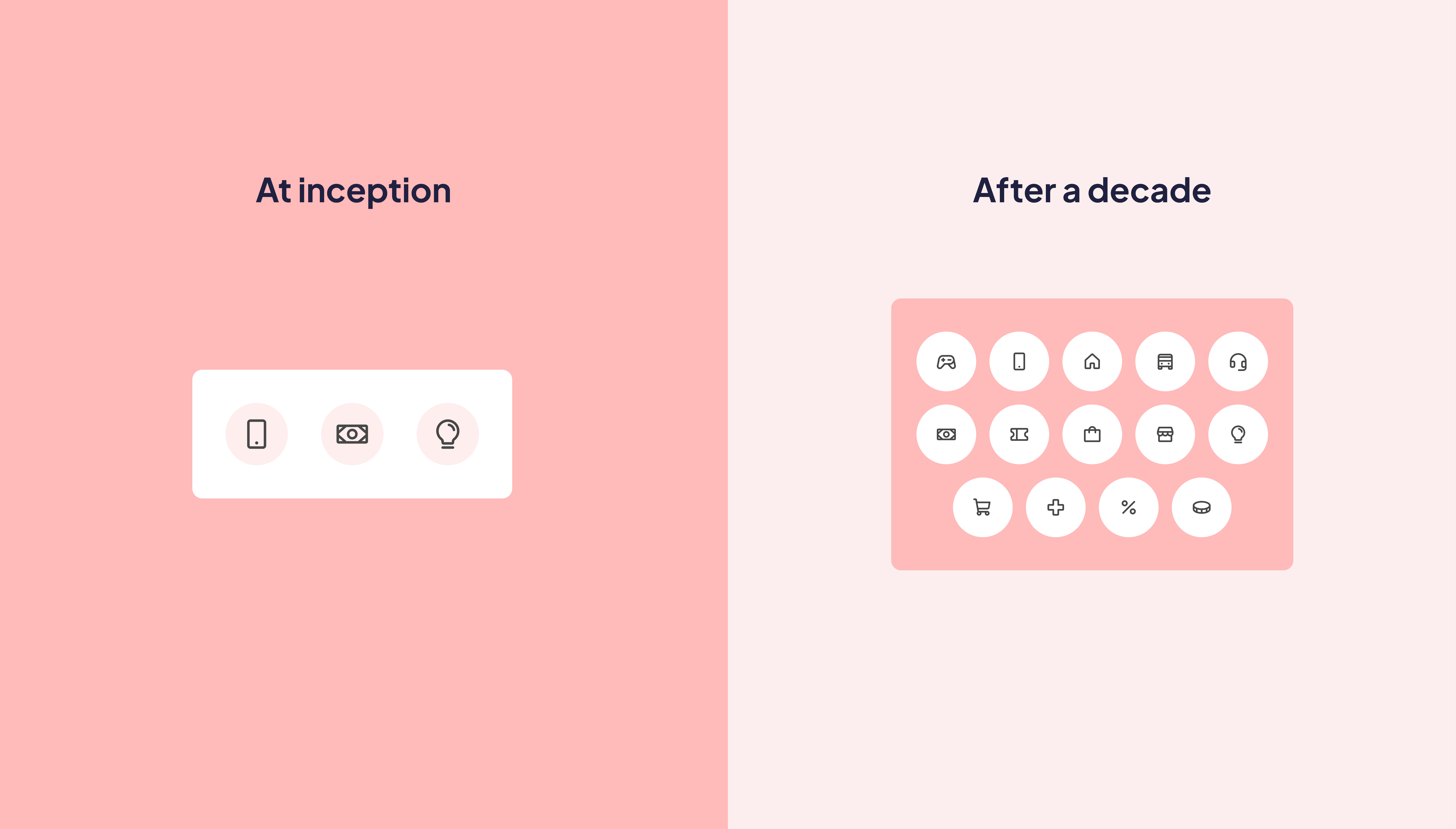
Quickteller started as a basic payment app but grew beyond that within a decade. As it grew, challenges caused by design inflexibility and a weak infrastructure made it difficult to expand unrestrained. There was only one recourse: rebuilding Quickteller from scratch.
The overhaul, in two stages: Research & Design
Stage 1: Research. Before this project could commence, there was a big question to answer: what form should the new Quickteller take? Research helped us reach an answer: the new Quickteller was going to be a superapp.
Stage 2: Design. After answering the question in stage 1, we moved on to design, keeping in mind that we were laying the groundwork for a superapp.
Stage one: Research
For years it was obvious to the team and leadership that a ground-up overhaul was necessary, and we finally got the green light. Due to its design inflexibility and weak infrastructure, Quickteller was disjointed: some features existed separately because they couldn’t fit into the mobile and web apps; others existed only on web but as separate apps on mobile.
We decided to let research guide the decision. In three phases (generative, design sprints and evaluative), we found our answer.
Generative research
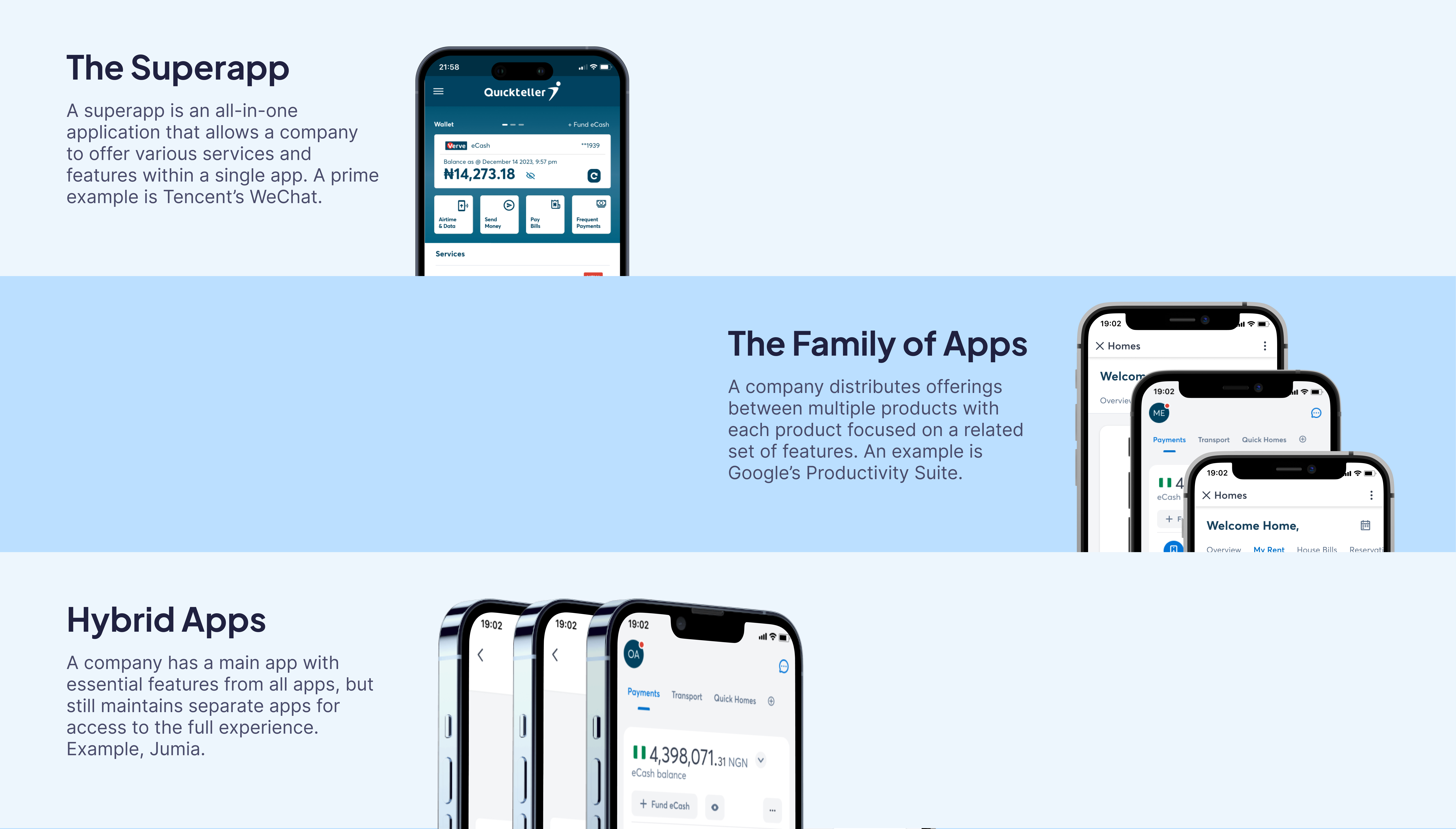
We wanted to understand how the current execution of Quickteller impacted the business and customers, and to gain a deeper understanding of business goals and customer behaviour. After synthesising the research data, we mapped it to find common themes, which led to three product concepts for the new Quickteller.
Design sprints
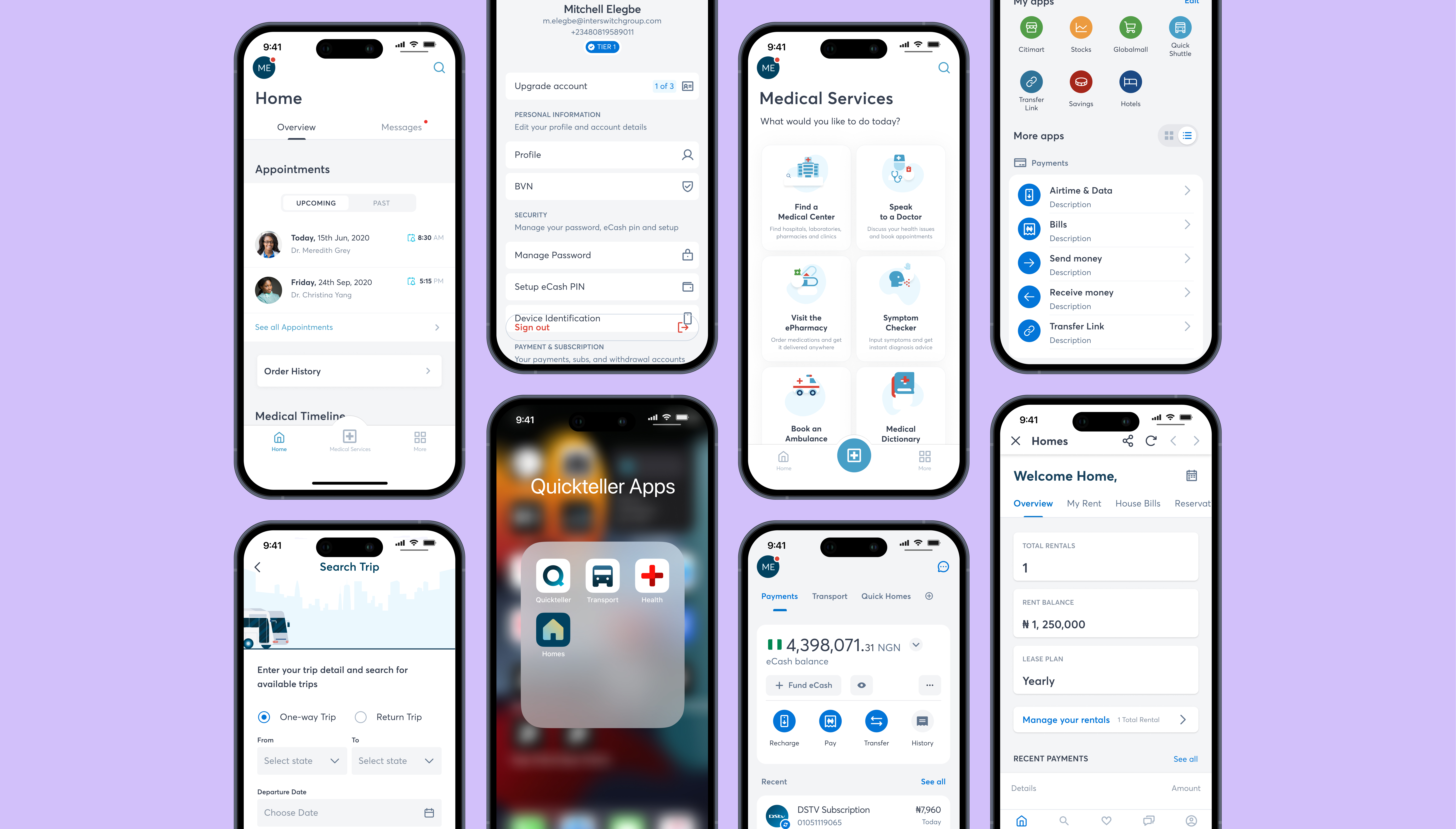
Armed with three concepts, we initially tried surveys to pick a direction, but the results were inconclusive, since respondents lacked a practical understanding of what the concepts meant. So we built models of each one instead, using design sprints structured around one model per sprint, testing identical flows across all three so results weren’t skewed.
Evaluative research
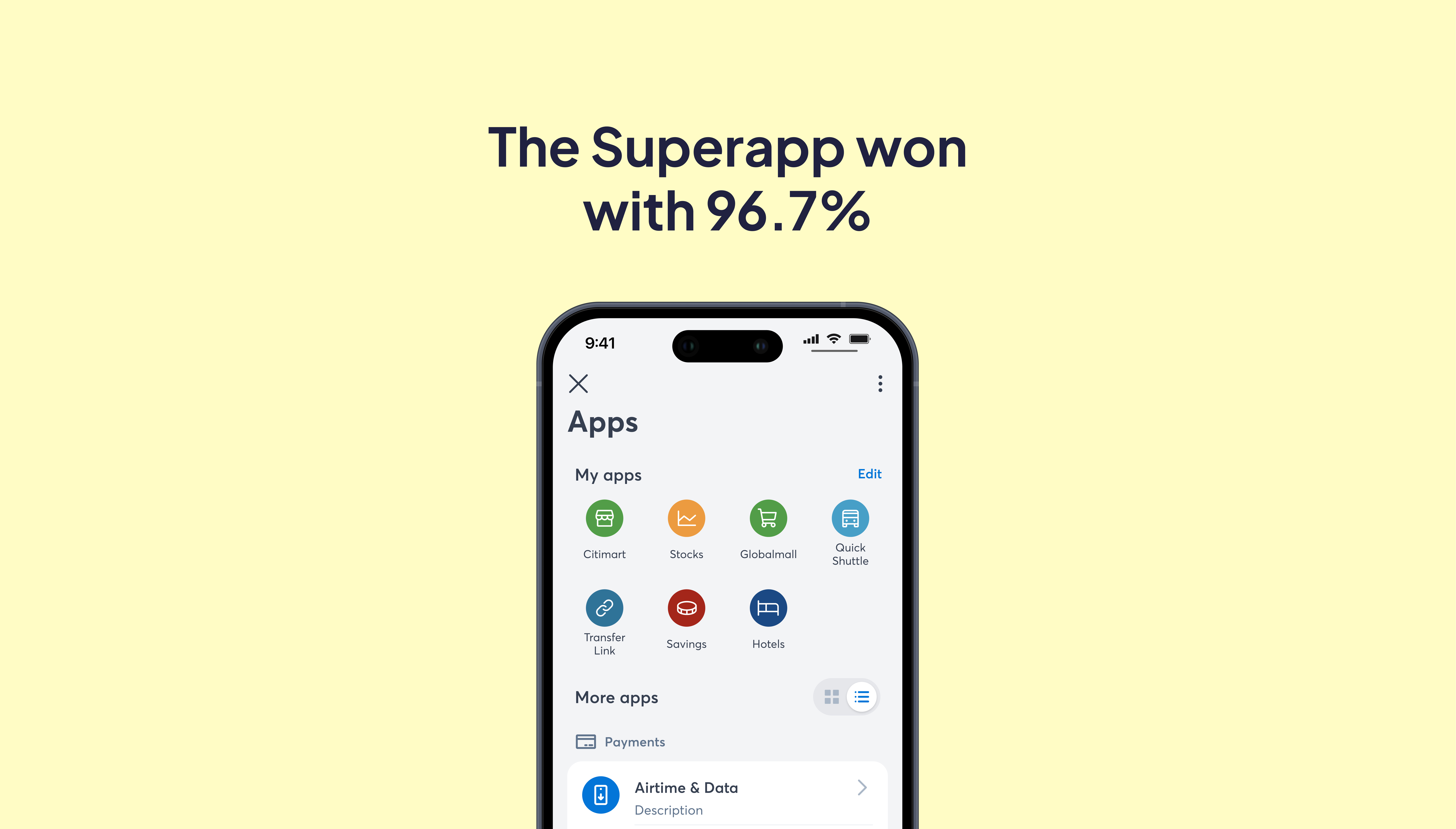
With the models from the sprints, we ran usability tests and interviews with 30 participants (63.3% current users, 36.7% non-users) over 6 days, remote and in person. The superapp won by a large margin (96.7%), with brand trust, ease of use and device storage as key deciding factors.
Stage two: Designing the new Quickteller Superapp
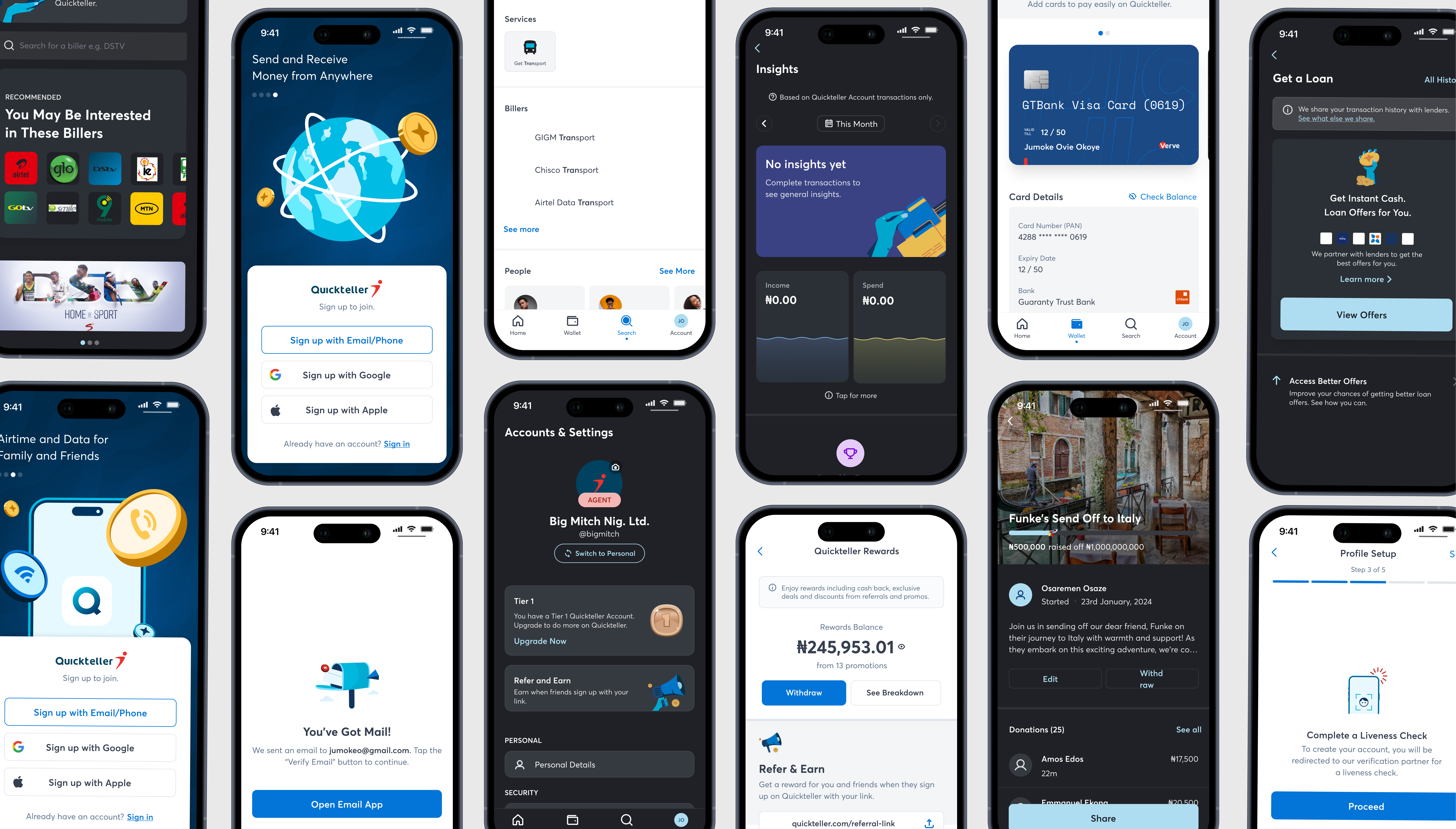
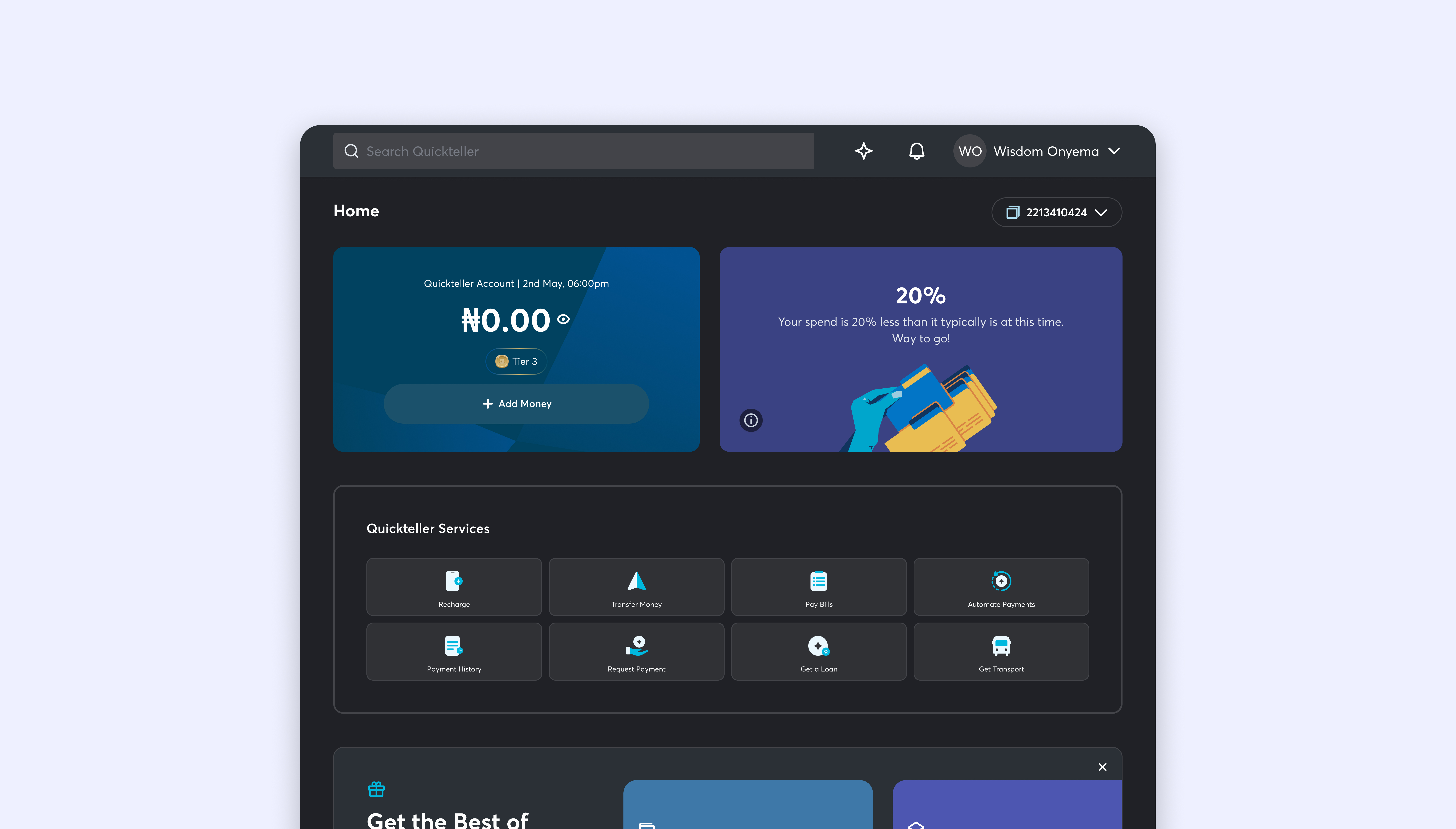
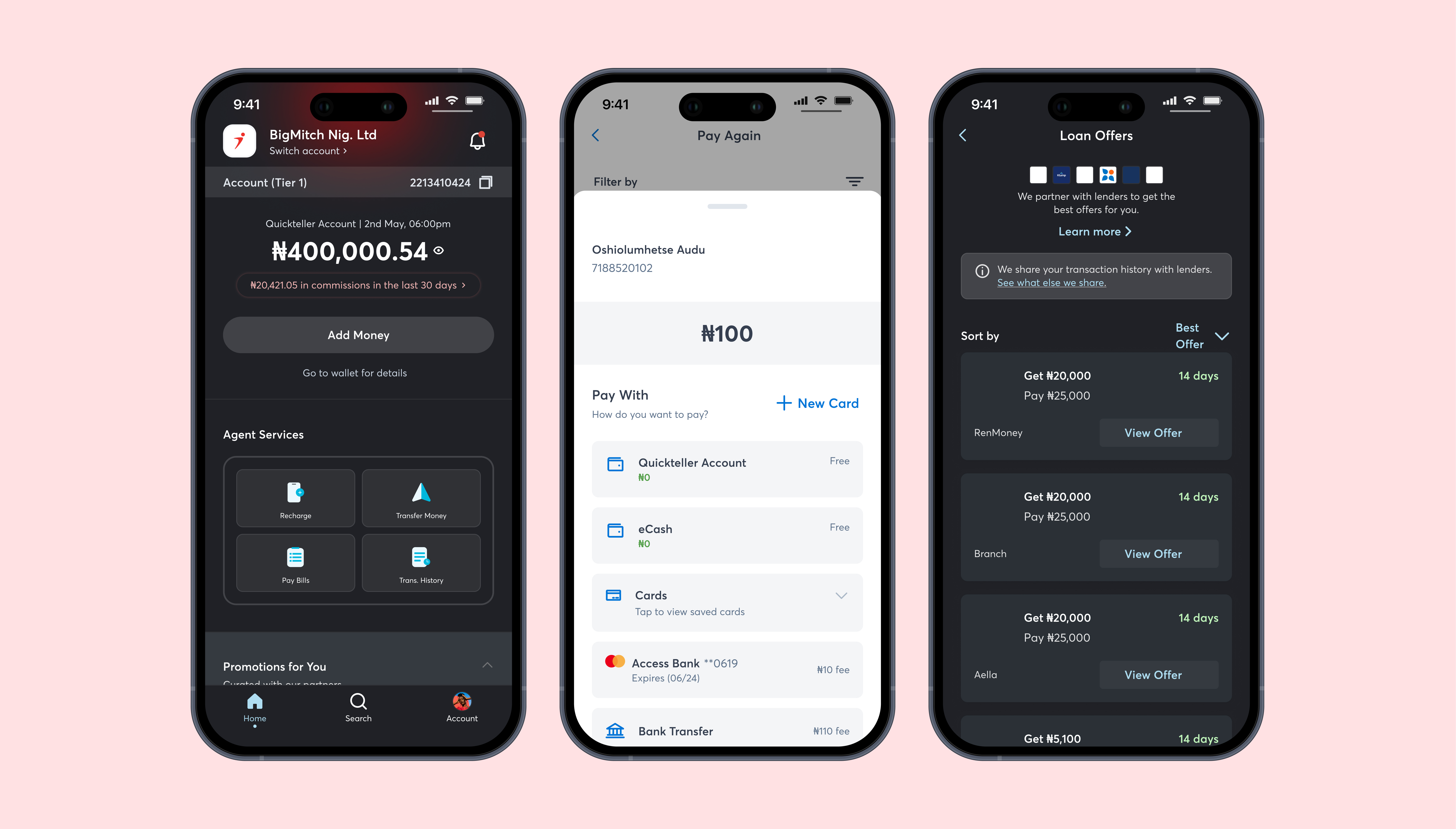
As lead designer, I managed the end-to-end design from planning to strategy, execution and delivery, establishing a systematic design approach, laying high-level design foundations, setting guidelines, reviewing work, managing stakeholders (six PMs at once) and designing hands-on. Using insights from the research stage, I set principles that guided the team through the design of multiple modules.
Exiting the Quickteller team
I left the Quickteller team just after its closed beta release, so I wasn’t able to monitor the impact of many of our improvements first-hand. Still, this remains one of my most pivotal projects: I learned a lot about design, advocating for customers, the power of research, managing a team (and myself) through a large-scale project, managing stakeholders, navigating challenges, and more.