Heartbeat Usage Study: A diary study across three markets to codify the real jobs, triggers, and frustrations behind everyday use of the Heartbeat app.
Summary
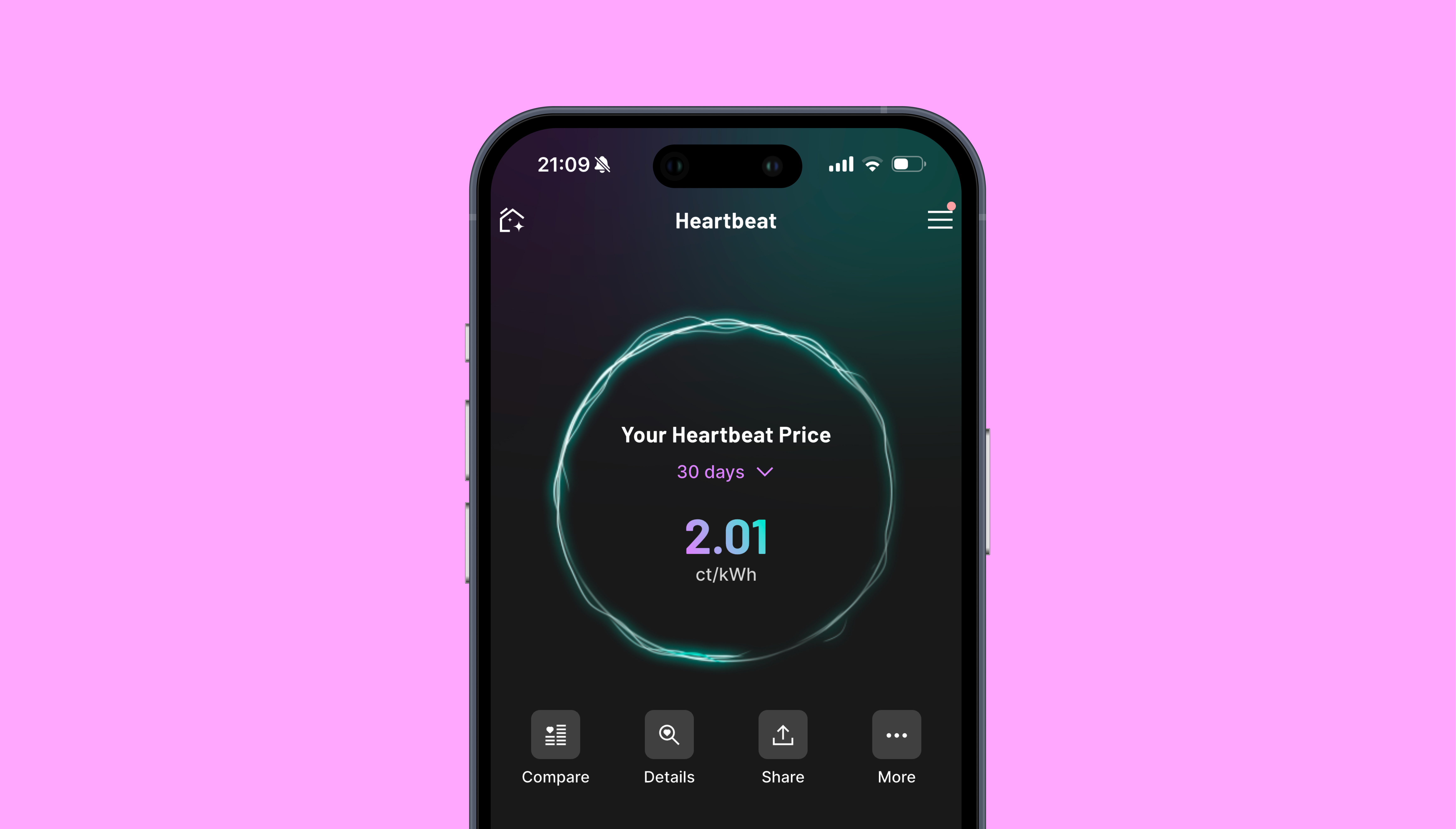
Led a diary study across three markets (Germany, Sweden, Netherlands) with 40 participants generating real-world usage entries for the Heartbeat App. The research replaced feature-centric assumptions with evidence: a ranked, market-specific map of the primary jobs customers hire Heartbeat to do, the frustrations tied to each one, and two customer archetypes. The findings directly informed subsequent UX updates and new feature development.
The problem
Our understanding of how customers used Heartbeat was almost entirely feature-centric. We knew what the app offered, but had little visibility into the day-to-day: why someone opens it, what triggers a visit, where it sits alongside other tools. Without that context, design decisions rested on assumed use cases rather than observed behaviour.
Why a diary study
Diary studies are better for capturing behaviour in the moment. Interviews ask people to reconstruct behaviour after the fact, which distorts it. I needed a pattern that plays out over time and across other tools. Each app open was logged with a short voice or text note: the trigger, the goal, and any other tool used alongside it. Materials were localised into German, Swedish and Dutch.
The study, by the numbers
The primary result: what Heartbeat is hired to do
The study’s central deliverable was a shift from assuming what people used the app for, to a ranked, market-specific picture of the actual jobs it gets hired to do:
Monitor system state
Check consumption, production, and battery level throughout the day. The single most common reason for opening the app in every market: 69% of DE entries, 82% of NL, 65% of SE.
Plan around energy prices
Check spot prices, then plan consumption around them. Morning heavy, and most pronounced in the Netherlands (64%), ahead of Sweden (50%) and Germany (38%).
Track solar generation
Check solar production and how it was allocated. Heaviest in the morning, when checking generation, and again in the evening, when reviewing the day's yield.
Monitor battery decisions
Check battery state, then review whether the AI's charge and discharge choices made sense, usually cross-checked against the energy price at the time.
Control EV charging
Make, initiate, and re-initiate charging decisions, often after working around a session that stopped without warning.
Verify and trust the AI
Review the actions Heartbeat's AI took, judge whether they made sense, and override or route around them when they did not. The single heaviest job in Sweden and Germany.
What we found
Beyond the ranked list of jobs, the diary data surfaced when and why people actually open the app, the tools sitting alongside it, where the experience broke down, and the distinct ways people use it day to day.
Top trigger: Monitor system state
Top trigger overall, checking consumption, production, or battery
A routine check of the system, not a decision or a problem, is what pulls people into the app most often, and it dominates even more heavily in the Netherlands than in Germany or Sweden.
Next top trigger: Plan around energy prices
Second most common trigger, concentrated in the morning rather than spread across the day
The ecosystem around Heartbeat
Tools people cross-reference before or after opening the app
Heartbeat was not a standalone habit. It was one node in a small personal stack. Mapping where people fell back to a provider portal or a spreadsheet showed us exactly where the app was quietly being outsourced to something else, particularly around manual override and monthly usage summaries.
Points of friction and frustration
We gathered information on where customers express the most frustration and what the likely causes were:
Inability to understand or override AI decisions
The single most cited frustration, concentrated in Sweden and Germany. Participants could not tell why the AI made a decision and had no way to intervene, so many built manual workarounds that did not reduce the frustration.
Interrupted EV charging
A smart-charge session that stops does not restart on its own, and the interruption is reported by the EV's own app rather than by Heartbeat.
High-cost charging events
Participants noticed, and reacted to, the EV charging during a high-price window, tying straight back to distrust in the AI's decisions.
Data discrepancies
Values differ between tabs, or between the app and third-party tools, undermining confidence in the numbers overall.
No monthly total view
An infrequent complaint, but a high-frustration one. Other tools in the ecosystem provide this by default.
Price transparency
Participants questioned the accuracy of the prices shown, often after comparing them with a third-party source, tracing back to differences in hourly versus quarterly aggregation.
Customer archetypes
Two behavioural patterns synthesised from the diary data.
The Supervisor
Treats Heartbeat as a control room, monitoring to understand.
- Opens Heartbeat many times a day, often unprompted
- Actively checks readings against third-party sources to verify accuracy
- High technical comfort, with workarounds for known issues
- Had a trusted reference before Heartbeat, and has not let it go
- Full explainability: why did the AI make this decision
- Data they can trust enough that constant verification stops being necessary
- Control as a fallback
- Inadequate explanation of AI decisions
- Data discrepancies, in-app or against third-party tools
- Distrust of one part of the app bleeds into distrust of the whole platform
The Scheduler
Uses Heartbeat as a decision checkpoint: opens it to plan an action, gets an answer, and moves on.
- Opens the app to make a decision, such as when to run laundry or charge the EV
- Short, purposeful sessions; treats the AI as background infrastructure
- Highest goal-achievement rate of the archetypes observed
- An immediate, confident answer to "is now a good time"
- Current state at a glance: battery level, price, solar output
- Minimal friction between opening the app and taking action
- Ambiguous states slow down the short session they came for
- Silent automation failures (a charge that did not start), with no proactive alert
- No distinction between "I checked, it's fine" and "this needs your attention"
Outcome
The study replaced a fragmented, assumption-based picture of Heartbeat usage with a grounded one, and gave the team language, evidence, and a reusable baseline to design from. It produced:
A ranked, market-specific map of the primary jobs customers hire Heartbeat to do
A frustration map tying each pain point back to a specific job
Two customer archetypes: the Supervisor and the Scheduler
An ecosystem map of adjacent tools, informing integration and context-switching priorities
A language bank of customers' own words, feeding directly into copy and onboarding
Directly informed subsequent UX updates and new feature development for the app